
Table of Contents
ToggleA DOOH campaign in Qatar can look perfect.
Premium screens. High-traffic zones. Strong creative. The plan checks every box.
The difference between a “nice campaign” and a “repeatable budget line” is measurement: a clear way to connect exposure to real-world store impact, and to prove incremental lift.
One question decides whether DOOH becomes a repeatable line item or a “nice one-off.”
Did this move people, or did we simply advertise in places where people already move?
This Qatar-first guide is for marketers, agencies, and retail teams who want decision-ready reporting. It covers:
How DOOH measurement works in practice
How to properly attribute footfall without inflating results
Which KPIs matter most for Qatar campaigns
How to avoid the pitfalls that destroy trust
How each major industry in Qatar can use measurement to scale budgets confidently
This approach aligns with the industry direction toward clearer definitions, transparency, and comparability, as highlighted in the IAB DOOH Measurement Guide. (Source: IAB)
Qatar DOOH, by the numbers
Qatar is compact, but it’s not a small movement market. Qatar’s mobility profile is the reason DOOH measurement needs to be more rigorous here than in many larger markets.
Qatar is a “visitor-amplified” market
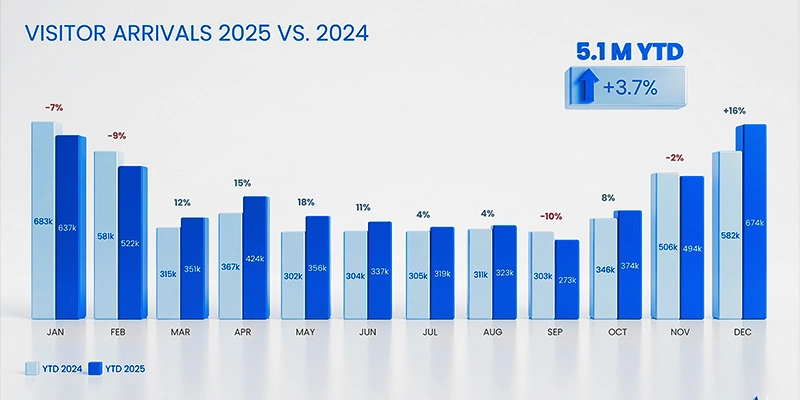
- Qatar welcomed 5.1 million international visitors in 2025. (Source: Qatar Tourism)
Qatar’s population was 3,214,609 by the end of December 2025, based on National Planning Council figures reported locally. (Source: The Peninsula)
The media market is compact, so scrutiny comes faster.
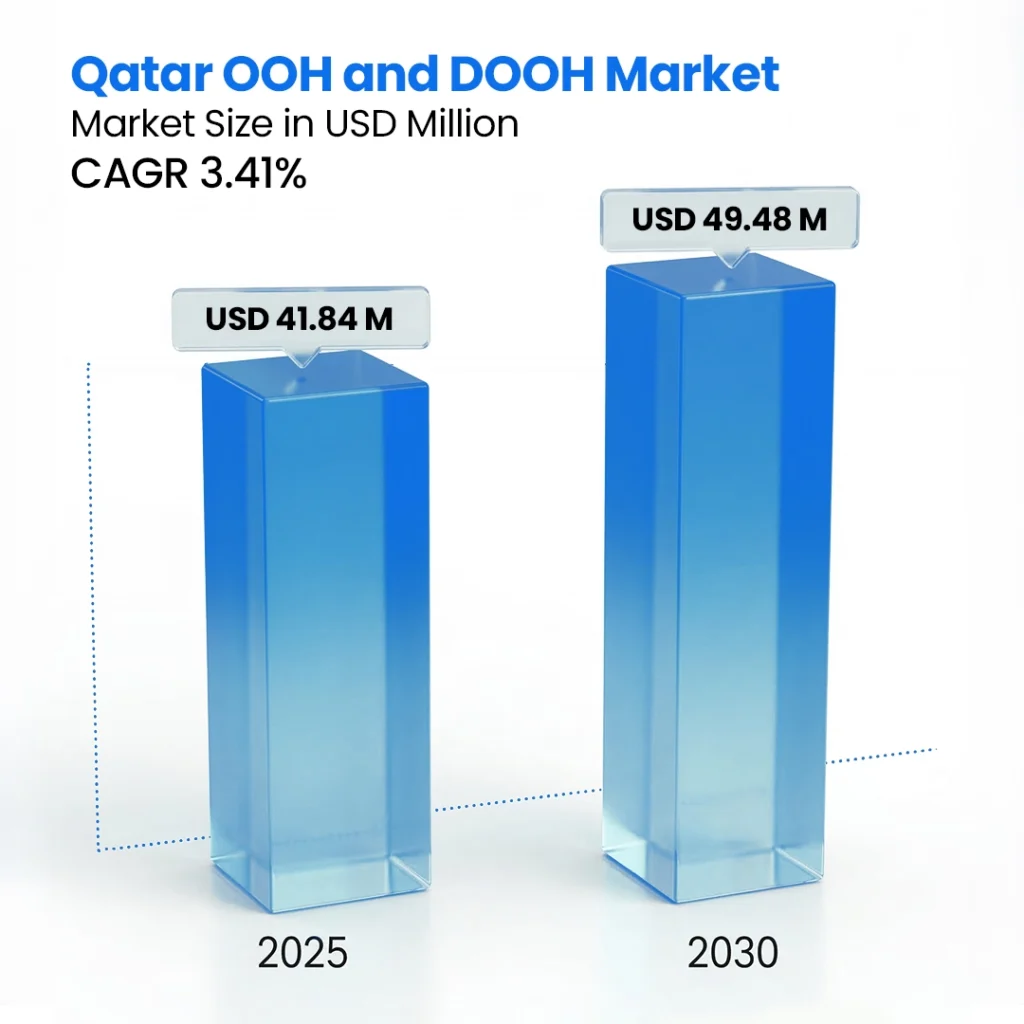
Mordor Intelligence estimates the Qatar OOH and DOOH market at USD 41.84M in 2025, growing to USD 49.48M by 2030. (Source: Mordor Intelligence)
In a compact market, “trust” becomes a competitive advantage. Results get questioned earlier, and budgets get defended harder.
That means Qatar is not just a resident market. It is a market where visitor flows materially change who is exposed and who visits retail locations.
Digital penetration is near-universal, so DOOH is inherently omnichannel
- DataReportal reports 99% internet penetration and 2.95 million social media user identities (94.3% of the population) in Oct 2025.
Why DOOH measurement matters more in Qatar than most markets

Qatar is highly mobile and highly concentrated in a few commercial and lifestyle corridors. That sounds simple. It creates very specific measurement challenges:
- High footfall density in key zones
Locations like West Bay, The Pearl, Lusail, and major mall ecosystems generate strong baseline visitation. Without control design, your report can mistake “busy area behavior” for campaign impact. - Fast-moving roadside exposure patterns
Roadside LED placement can deliver reach, but exposure quality varies heavily by speed, traffic flow, and viewing time. Measurement must separate what ran from what can reasonably count as exposure. - Strong commuter and routine-driven movement
Qatar has predictable mobility loops: home-to-work, work-to-mall, work-to-leisure, and weekend family patterns. This underscores the importance of correctly matching control audiences. - High tourism and event-driven spikes
Seasonality and event cycles can create false lift when you compare periods without proper controls or run short windows without context.
In short, you can run DOOH in Qatar easily. You can claim results easily.
But you can only scale DOOH budgets when measurement is rigorous enough to survive scrutiny from brand, finance, and procurement stakeholders.
The glossary that prevents confusion (and protects trust)
Most debates happen because teams use the same words to mean different things. Use this glossary in every report.
Term | What it means | Why it matters |
Delivery | The ad played on the screen (proof-of-play). | Delivery is not exposure. |
Impression | A modelled count of opportunities to see, based on accepted audience measurement approaches. | Useful for planning and comparability. Requires transparent methodology. |
Exposure | A defined rule set for who is considered “exposed,” often used for outcomes studies. | Exposure definitions must be documented and environment-specific. |
Visit | A person entered a store POI and met the visit rule (dwell, exclusions). | POI quality drives false positives or credibility. |
Attributed visit | A visit that occurred after exposure within a visitation window. | Attribution alone can be misleading. |
Incremental visit | A visit that is above baseline, derived using control comparisons. | This is the proof layer. |
Lift | The increase in the visitation rate in the exposed vs control. | The metric stakeholders trust when well-designed. |
This kind of definition discipline is exactly what industry bodies push toward as the channel matures. (Source: IAB DOOH Measurement Guide).
What does DOOH measurement really mean?
DOOH measurement is the process of quantifying how DOOH activity contributes to business outcomes. It moves beyond screen delivery and into a structured framework that covers:
Delivery and exposure definitions: what counts as a valid exposure, not just an impression.
Audience movement outcomes: store visitation outcomes tied to campaign exposure.
Incrementality: The additional store visits caused by the campaign, not natural foot traffic or routine movement.
Transparent reporting: Consistent KPIs and clear methodology notes that stakeholders can trust, replicate, and compare across campaigns.
In Qatar, measurement requires an extra level of robustness: it must work across very different environments, from high-speed roadside corridors to dense mall ecosystems, from tourism-heavy districts to commuter-driven business areas, and from premium lifestyle zones to neighborhood retail clusters.
What is footfall attribution in DOOH?
Footfall attribution estimates the number of people who visited a store after being exposed to DOOH placements. It links exposure to store visitation outcomes using location signals and campaign delivery data.
A credible footfall attribution approach should answer:
Who was exposed?
Which stores matter?
What counts as a visit?
How many visits happened after exposure?
How many of those visits were incremental?
Footfall attribution becomes valuable when it is treated as a measurement discipline rather than a dashboard number.
Store visit attribution vs incrementality
This difference is where most DOOH reporting becomes weak.

Store visit attribution answers:
“How many visits happened after exposure?”
Incrementality answers:
“How many additional visits did the campaign cause compared to what would have happened without it?”
In Qatar’s dense environments, attribution alone can look impressive even when the campaign had a limited effect, especially in high-footfall environments like major malls, transit hubs, and dense retail clusters. Incrementality is what turns footfall reporting into proof.
If your stakeholders only remember one line, it should be this: visits are a result, lift is the proof.
What is the DOOH measurement framework?
A DOOH measurement framework is a set of consistent rules that define exposure and visits, then quantify outcomes with controls that reduce bias. The most trusted measurement approaches share these principles:
Clear definitions used consistently
Transparent methodology, not black-box metrics
Separation of delivery, exposure, visits, and incremental lift
Controls that reduce natural foot traffic bias
The IAB guide frames this as an ecosystem need: consistency and shared frameworks are what create trust and scalability.
Below is a practical framework that works well in Qatar, from roadside networks to mall screens, airports, and transit environments.
Step 1: Define the business outcome and the store set
Start with clarity. DOOH measurement fails when objectives are vague, and store sets are inconsistent.
Define the outcome: Be explicit about what you want to measure:
Total store visits
Visits by segment (new vs returning, high-propensity clusters, commuter audiences)
Visits to specific branches (Doha-only branches vs multi-branch coverage)
Visits to a retail network (all branches, weighted by trade area importance)
Define how stores will be represented
Qatar has many retail clusters inside complexes. If you treat every shop in a dense complex as a separate POI without careful boundaries, attribution will inflate.
Choose the right POI approach:
Single POI per store for standalone locations and clear footprints
Grouped clusters for tightly packed adjacent stores in the same complex
Mall-level POI when the business question is “did we drive mall visitation” rather than store-level impact
Decide what proof level you need
Some campaigns are designed for broad brand reach. Others are designed to drive retail impact. Define whether you need:
Visit uplift only
Visit uplift plus validation signals like time-to-visit distribution
Incrementality with exposed vs control and incremental visits
The strongest reporting packages include both lift and the diagnostics that explain it.
Step 2: Build accurate POIs and visit definitions
POI quality is one of the biggest drivers of false positives.
In Qatar, POIs often sit near:
Main roads and slip roads
Shared parking zones
Mixed-use towers
Adjacent venues inside the same complex
A strong POI design reduces “drive-by” and “pass-through” classification errors.

What a credible visit definition includes
Minimum dwell threshold aligned to venue type: A quick pass through a parking area should not count as a store visit.
Removal of pass-through zones where relevant: Highways, slip roads, and short stop zones can create false visits.
Consistent handling of repeated visits: If a frequent shopper visits the same location multiple times, your reporting should separate total visits from unique visitors, and your incrementality should not be inflated by repeat behavior.
In many Qatar environments, the boundary between “this store” and “this adjacent venue” is thin. That is why POI boundaries must be designed intentionally. The measurement objective should determine the POI shape, not the other way around.
Step 3: Define exposure properly
Not every delivered ad should be treated as a valid exposure for footfall measurement. Exposure should be defined in a way that makes sense for the environment:
Roadside screens behave differently from mall screens
Airport screens behave differently from neighborhood LED boards
Transit environments have different dwell patterns than highways
The key is to document exposure logic clearly and apply it consistently throughout the campaign.
Why the exposure definition matters in Qatar
Qatar has a mix of very high-speed corridors and high-density environments.
If you define exposure too broadly, you risk counting people who had minimal opportunity to see the ad. If you define it too narrowly, you may undercount impact and reduce learning.
The right approach is not “strict” or “loose.” It is consistent and documented.

Practical exposure guidance by the environment
High-speed roadside corridors
Focus on consistent delivery validation and robust control design
Be careful with claims about “viewed impressions” unless you have a methodology that supports it
Use outcomes measurement and incrementality to prove impact
Mall and retail indoor DOOH
Expect higher baseline footfall and higher repeat behavior
Prioritize deduplication and unique visitor views
Use time-to-visit and venue breakdowns to validate
Airport and transit environments
Expect a mix of visitors and commuters
Separate tourists from routine commuters where possible
Use longer visitation windows in categories with longer decision cycles
Step 4: Build exposed and control audiences
This is the foundation of incrementality.
Exposed audience: Users who meet your exposure definition.
Control audience: A matched audience that was not exposed, but is similar in relevant movement and contextual behavior.
The purpose of control is simple: estimate what would have happened without the campaign. Without a control group, you are usually reporting correlation.
A] What strong matching looks like in Qatar
A strong matching approach often considers:
Typical movement patterns near the store category
Distance-to-store distribution
Time-of-day movement behavior
Geographic similarity where relevant
Qatar is a smaller market geographically, so matching must be careful. If you choose a control audience that lives or works in a different type of district, you introduce bias quickly. Good control design is not complicated. It is disciplined.
B] Why exposed vs control matters for high-footfall zones
If you advertise near major malls or lifestyle areas, your exposed audience will naturally have a higher likelihood of visiting those zones. Control matching prevents you from confusing that baseline likelihood with campaign-driven impact.
Step 5: Apply a visitation window
The visitation window is the time period after exposure in which visits count toward attribution.
A] There is no single universal window. It depends on the category and purchase cycle:
QSR and convenience behavior are often short-cycle
Apparel and electronics can be longer-cycle
Automotive and high-consideration categories require longer windows
B] What matters most is that the window is:
Defined before reporting
Applied consistently
Documented in the report
C] Qatar-specific note: event-driven visitation spikes
Short windows can over-credit DOOH if an event or seasonal spike occurs immediately after exposure. Control comparison helps, but windows still need to be chosen carefully and documented.
Step 6: Deduplicate visits
Without deduplication, store visit numbers inflate quickly, especially in high-frequency audiences or high-footfall locations.
A] Deduplication typically means:
Counting unique visitors separately from total visits
Avoiding counting repeat visits by the same user in a way that exaggerates performance
B] Your report should clearly separate:
Attributed visits
Unique visitors
Incremental visits
Why is deduplication essential in Qatar retail?
Many consumers in Qatar shop in routine basis, especially for family and household needs. If you report only total visits, you can mistakenly conclude that you drove more incremental footfall than you did. Unique visitors and incremental visits protect credibility.
Step 7: Calculate incremental lift
Incremental lift is generally derived from comparing visitation behavior between the exposed and control groups.
A] Outputs typically include:
Visitation rate for exposed
Visitation rate for control
Lift percentage
Incremental visits
This is the proof layer. It enables confident decisions even when foot traffic baselines differ across districts and environments.
B] Lift becomes most useful when paired with:
Unique visitors vs total visits
Time-to-visit distribution
Venue-level breakdowns
Daypart and weekday insights
This turns a measurement report into an optimisation tool.
The KPIs Qatar stakeholders actually trust
Most DOOH reports fail because they either over-focus on delivery metrics or over-focus on a single outcome metric without the diagnostics needed to trust it
These are the KPIs leadership cares about:
- Attributed store visits (deduplicated view)
- Incremental lift
- Incremental visits
- Cost per incremental visit (when applicable)
- Top-performing venues and dayparts
In Qatar, executive stakeholders typically want proof on one page: did DOOH drive incremental store impact, and where did it work best.
1. Measurement credibility KPIs (the trust layer)
These KPIs make the outcome believable:
Time-to-visit distribution (how quickly people visit after exposure)
Visit frequency distribution (repeat behavior pattern)
Unique visitors vs total visits
Control alignment summary (how the control was matched)
If you cannot explain your controls and your visit rules, the measurement will be questioned.
2. Optimisation KPIs (the scaling layer)
These KPIs help improve performance:
Visits and lift by:
Lift by venue type (mall, roadside, airport, transit)
Lift by city and district breakdowns within Qatar (district-level patterns in Doha and surrounding zones)
Lift by daypart and day of week
Lift by creative version or message angle (if multiple versions are used)
Optimisation is where DOOH becomes repeatable. It turns “a good campaign” into “a scalable channel.”
Common DOOH measurement pitfalls in Qatar, and how to avoid them

Pitfall 1: Counting “busy locations” as performance
High-footfall areas create attractive visit numbers. Without control comparisons and strict visit definitions, the report can misrepresent impact.
What to do instead:
Always report incremental lift alongside visits
Use visit-quality rules and deduplication
Include time-to-visit distributions
Pitfall 2: Weak POI boundaries in dense retail zones
In dense retail zones, inaccurate POIs can count nearby movement as visits.
What to do instead:
Improve POI mapping precision
Exclude pass-through zones when needed
Validate with venue-level logic, especially in malls and mixed-use areas
Pitfall 3: Mixing retargeting effects into DOOH effects
If you retarget exposed audiences via mobile or social, the lift may reflect both DOOH exposure and retargeting.
What to do instead:
Separate the DOOH exposure effect from subsequent retargeting effects in reporting
Clearly label the combined impact vs the exposure-only impact
Pitfall 4: Overcounting repeated visits
Without deduplication, frequent shoppers inflate numbers.
What to do instead:
Report unique visitors and incremental visits as primary proof metrics
Keep total visits as a secondary diagnostic metric
Pitfall 5: Reporting a single metric without methodology
Stakeholders will trust the report only if they can understand how it was measured.
What to do instead:
Include a short methodology section in every report
Define exposure, visit rules, window, and control design
In Qatar, this is non-negotiable. The market is sophisticated, and stakeholder scrutiny increases as budgets grow.
How to think about DOOH environments in Qatar
To make DOOH measurement practical, you need to understand how environments influence both performance and measurement design.
High-speed roadside corridors
Best for scale and broad reach. Measurement should be strict on attribution credibility and incrementality because exposure quality varies.
What to prioritise:
Lift and incremental visits
District-level performance breakdowns
Daypart performance patterns
Creative clarity and fast comprehension
Mall ecosystems and premium retail districts
Best for shopper conversion and brand association. Measurement must be careful with baseline footfall and repeat behavior.
What to prioritise:
Deduplicated visits and unique visitors
Visit quality rules
Control matching
Time-to-visit distributions
Transit environments
Best for commuter frequency and sustained recall. Measurement must separate commuter patterns from campaign impact.
What to prioritise:
Matching controls by routine behavior
Daypart patterns
Creative sequencing for repeat exposures
Airport environments
Best for premium audiences and high consideration categories. Measurement requires careful segmentation and appropriate visitation windows.
What to prioritise:
Category-appropriate visitation windows
Clear separation of traveler-driven movement patterns
Venue-level breakdowns for learnings
MEmob+ DOOH Measurement Methodology for Qatar
At MEmob+, we measure DOOH impact using a clear framework that prioritizes transparency, consistency, and decision-ready outcomes. The goal is to move from screen delivery to store impact by connecting exposure to visitation and incremental lift.
Measurement principles
Clarity over complexity: define exposure and visits in plain language and apply it consistently.
Incrementality-first: visits matter, but lift is the proof.
Bias control: exposed vs control is treated as mandatory for credible outcomes.
Responsible measurement: privacy-aware processing and aggregated reporting
How the methodology works
- Define measurement inputs upfront
We align objectives, store sets, and KPI outputs before launch. This includes exposure logic, store boundaries, and the visitation window so results remain comparable across Qatar deployments.
- Build POIs and visit definitions designed for dense retail environments
We map store locations with boundaries designed to reduce false positives from roads, parking areas, and adjacent venues. Visits are measured using predefined visit-quality rules to reduce pass-through counting.
- Establish exposed and matched control audiences
We quantify incrementality by comparing exposed behavior to a matched control audience. This reduces bias from natural foot traffic patterns, seasonality, and location-driven movement.
- Apply visitation windows and deduplication
Visits are measured within the agreed window and deduplicated, so results are not overstated. Reporting separates attributed visits, unique visitors, and incremental outcomes.
- Report lift that is optimization-ready
Outputs include attributed visits, incremental lift, incremental visits, time-to-visit distribution, and venue-level insights.
What stakeholders receive
A Qatar-ready KPI set: exposure and delivery signals, attributed store visits, deduplicated visitors, incremental lift, incremental visits, and breakdowns by venue and time. Every report includes a methodology note that explains how the measurement was produced.
Industry use cases in Qatar (how each sector should leverage measurement)
This is where DOOH becomes a growth lever, not just a media line.
Retail and malls
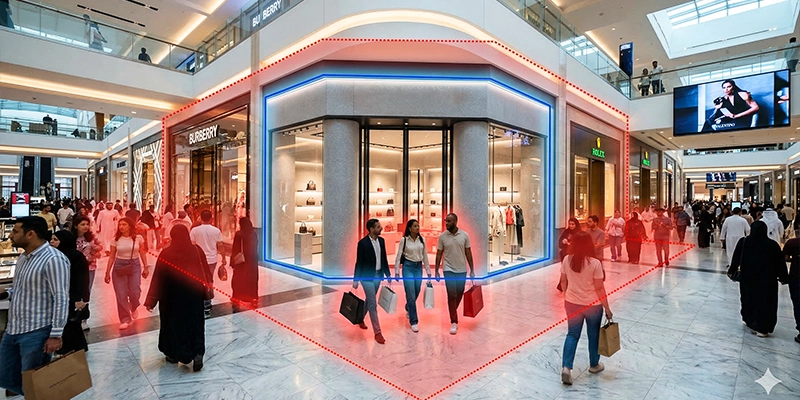
- Goal: drive incremental visits to branches, malls, or a store network
- Window: mid-cycle (category dependent)
- KPIs: incremental visits, lift, venue and daypart winners, unique visitors
- Common Qatar pitfall: inflated attribution in high-footfall zones
- Fix: strong controls + strict POIs + deduplication
QSR and quick commerce
- Goal: short-cycle visits driven by proximity and daypart
- Window: short-cycle
- KPIs: incremental visits, lift by lunch/dinner, time-to-visit curve
- Common pitfall: crediting routine commuter stops
- Fix: control matched on routine mobility, not just geography
Grocery
- Goal: incremental store trips and repeat behavior insights
- Window: short to mid-cycle
- KPIs: unique visitors, incremental visits, frequency distribution
- Common pitfall: repeat shoppers inflating totals
- Fix: deduplication and unique-first reporting
Automotive
- Goal: showroom visits, test drive footfall, dealer network performance
- Window: longer-cycle
- KPIs: incremental visits, lift by district, time-to-visit (long tail)
- Common pitfall: too short a window makes results look weak or misleading
- Fix: category-appropriate windows and diagnostics
Telecom
- Goal: store visits, plan upgrades, device launches
- Window: mid-cycle
- KPIs: lift by district, venue mix performance, incremental visits
- Common pitfall: mixing retail and service visits without POI logic
- Fix: clear POI segmentation per store type and service location
Banking and financial services
- Goal: branch visits, premium product acquisition support
- Window: mid to longer-cycle
- KPIs: lift, unique visitors, audience segment performance
- Common pitfall: weak store definitions in mixed-use towers
- Fix: POI boundaries designed for dense urban environments
Hospitality, tourism, and experiences
- Goal: incremental visits to destinations, attractions, premium retail clusters
- Window: varies widely
- KPIs: lift by environment (airport, mall, destination), segmentation
- Common pitfall: tourism spikes are misread as campaign impact
- Fix: stronger controls and event-aware analysis
Qatar’s tourism demand and accommodation footprint underscore how meaningful visitor flows are when interpreting baseline movement.
FAQ: DOOH measurement and footfall attribution in Qatar
What is DOOH measurement in Qatar?
DOOH measurement quantifies how DOOH contributes to outcomes such as store visits and incremental lift, using clear exposure and visit definitions plus control comparisons to separate correlation from true impact.
What is footfall attribution in DOOH?
Footfall attribution estimates how many people visited a store after being exposed to DOOH placements. It links exposure to visits using defined store boundaries, a visitation window, and reporting rules designed to reduce false visits.
What is the difference between store visit attribution and incrementality?
Attribution counts visits after exposure. Incrementality estimates the additional visits caused by the campaign by comparing exposed audiences to a matched control group. Incrementality is a stronger proof because it reduces natural foot traffic bias.
How do you measure incremental store visits from DOOH?
You define exposure rules, build an exposed audience, create a matched control audience, and then compare store visitation rates within a set visitation window. The difference results in incremental lift and visits.
What is an exposed vs control methodology in DOOH measurement?
Exposed users meet the campaign’s exposure definition. Control users are similar audiences who were not exposed. Comparing their visitation behavior isolates lift and improves trust in the reported impact.
How do you avoid false store visits in footfall attribution?
You use accurate POI boundaries, apply visit-quality filters aligned to venue type, exclude pass-through zones where needed, and deduplicate visits. You also validate outcomes through control comparisons and diagnostics, such as time-to-visit distributions.
What is a good visitation window for footfall attribution?
It depends on the category. QSR and convenience are typically shorter-cycle, while higher-consideration categories may require longer cycles. The key is to define the window upfront and apply it consistently in reporting.
What KPIs should DOOH campaigns report in Qatar?
At minimum: exposure volume, reach and frequency signals where available, attributed store visits, deduplicated visitors, cost-per-incremental-visit where applicable, and incremental lift. Add diagnostics such as time-to-visit distributions and venue-level breakdowns to enhance credibility and optimize.
Can DOOH measurement be privacy-safe?
Yes. Measurement can be done with privacy-safe processing and aggregated reporting so individual identities are not exposed. What matters is transparent methodology and consistent definitions.
Can DOOH be measured across malls, roads, and airports the same way?
The measurement framework remains consistent, but exposure and visit rules should adapt to the environment. Different placement types have different dwell behavior and movement patterns, so definitions must be documented accordingly.
How do you handle deduplication in DOOH reporting?
Deduplication ensures the same user is not counted repeatedly in a way that inflates performance. A credible report separates total visits, unique visitors, and incremental visits.
Does retargeting affect DOOH measurement?
Yes. If you retarget exposed audiences, reporting should separate the DOOH exposure effect from the retargeting effect. Otherwise lift can be overstated.
Closing: How Qatar brands should scale DOOH with confidence
DOOH in Qatar is ready to be treated as a performance channel, but only if measurement is built correctly. The winning approach is consistent:
- Define exposure and visit rules before the campaign starts
- Treat the exposed vs control as the foundation of incrementality
- Lead with lift and incremental visits, not just attributed visits
- Include diagnostics that make outcomes believable
- Keep methodology transparent so stakeholders trust and repeat
When measurement is rigorous, DOOH stops being a one-off brand line item and becomes a scalable channel that can justify budget, improve with learning, and prove real retail impact.