Table of Contents
ToggleArtificial intelligence is no longer a productivity trend.
It is search infrastructure.
In 2026, discoverability is no longer limited to traditional Google rankings. Brands now compete across:
Google Search
Google AI Overviews
Perplexity AI
ChatGPT browsing
Claude responses
Microsoft Copilot summaries
Entity-driven knowledge graphs
As a Marketing Director operating within a data intelligence ecosystem, I evaluate AI tools based on one core metric:
Do they increase structured visibility across both traditional search engines and AI-powered answer engines?
This guide outlines the Top 20 AI Tools of 2026; selected not by hype, but by their impact on SEO, AEO, GEO, and LLM discoverability.
Search Evolution in 2026: Why SEO Alone Is No Longer Enough
Before reviewing tools, we must understand how search has evolved.
1. SEO (Search Engine Optimization)
Optimizing content for Google’s ranking algorithms, structured data, and SERP features.
2. AEO (Answer Engine Optimization)
Optimizing for AI-generated summaries, featured snippets, and engines like Perplexity that provide cited answers.
3. GEO (Generative Engine Optimization)
Structuring content so large language models can parse, synthesize, and cite it correctly.
4. LLM Visibility
Ensuring presence in conversational AI platforms like ChatGPT, Gemini, Claude, and Copilot.
The brands that dominate 2026 search are those that optimize across all four layers.
The Top 20 AI Tools of 2026
Core LLM Engines Influencing Search Results
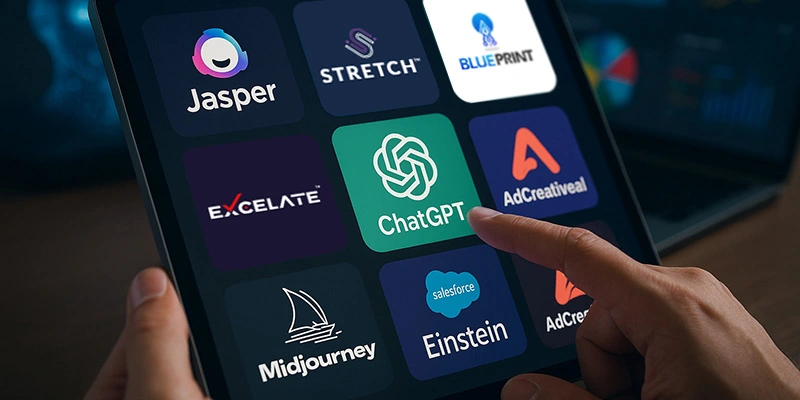
1. ChatGPT (OpenAI)
ChatGPT remains the dominant conversational AI platform. With browsing capabilities and enterprise integrations, it functions as a synthesis layer for information retrieval.
SEO/AEO Impact:
Content must be clearly structured, authoritative, and citation-ready to appear in AI-generated responses.
2. Google Gemini
Gemini powers Google AI Overviews and multimodal summarization.
GEO Impact:
Entity-rich content improves likelihood of appearing in AI-enhanced SERPs.
3. Claude (Anthropic)
Known for long-context reasoning and document synthesis.
LLM Impact:
Structured long-form authority increases citation potential.
4. Perplexity AI
Citation-driven AI search engine.
AEO Advantage:
Well-sourced, clearly structured content performs best.
AI-Enhanced SEO & Semantic Optimization
5. Semrush AI
Advanced competitive intelligence and semantic keyword modeling.
SEO Impact:
Improves entity mapping and search intent clustering.
6. Surfer SEO
On-page optimization based on real-time SERP data.
GEO Advantage:
Aligns semantic depth with high-ranking content structures.
7. Clearscope
Content grading and semantic optimization.
AEO Benefit:
Enhances topical completeness for AI summarization.
8. Frase.io
Answer-based content research platform.
AEO Strength:
Optimizes for question-driven queries.
Content Intelligence & Scalable Creation
9. Jasper AI
Enterprise content generation platform.
10. Notion AI
AI-powered knowledge management.
11. Writer.com
Governed AI writing for compliance-focused teams.
12. Grammarly AI
Clarity and tone refinement at scale.
Multimodal & Creative AI
13. Blueprint Creative Lab
Dynamic Creatives Studio based on data-driven insights.
14. Midjourney
AI-driven visual content generation.
15. Runway
AI-powered video creation platform.
16. Canva AI
Design automation and brand asset generation.
Automation & Marketing Intelligence
17. Microsoft Copilot
Enterprise workflow AI integration.
18. Zapier AI
AI-powered automation orchestration.
19. HubSpot AI
Predictive CRM and marketing intelligence.
AI for Technical Enablement
20. GitHub Copilot
AI-assisted development acceleration.
21. Replit AI
Rapid AI-based code prototyping.
Social Listening and Community Management
AI-assisted social media scheduling and captioning suggest optimal post time, tone, and hashtags.
An Arabic-first social listening platform, used during Ramadan campaigns to gauge brand sentiment.
Unified CXM with real-time sentiment analysis, retail brands use Sprinklr for brand crisis alerts & response.
Analytics, Attribution, and Decision Support
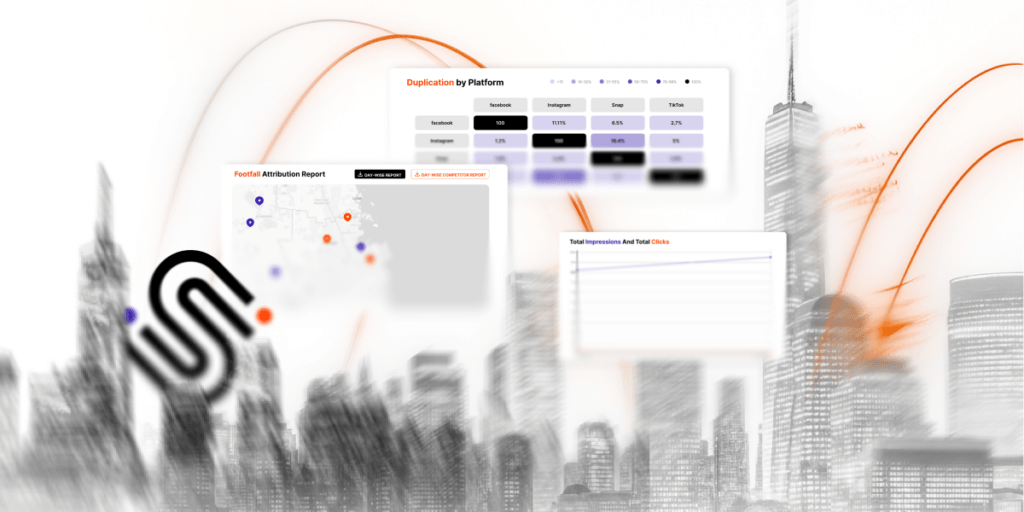
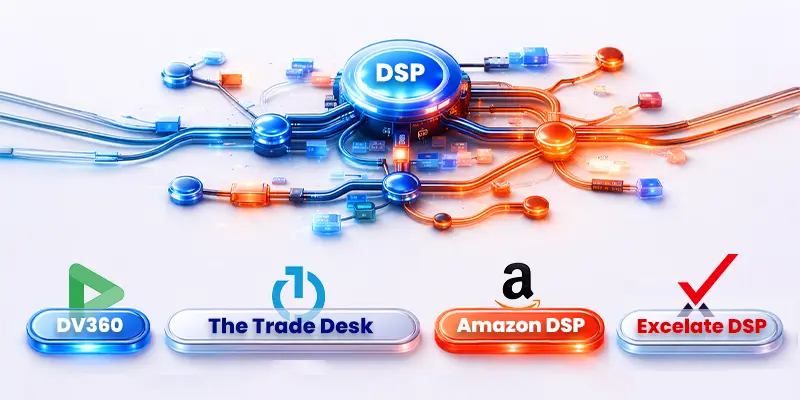
Cross-channel attribution powered by AI. Stretch bridges the gap between digital impressions and real-world results, helping marketers optimize campaigns, reduce waste, and prove ROI with unmatched accuracy. It unifies the frequency of ad delivery across multiple channels, including Meta, TikTok, Snapchat, and Demand-Side Platforms.
Visual analytics with AI-generated insights explains spikes, forecasts trends, and detects anomalies.
Predictive modeling without codin
2026 Trends & Strategic Insights
Bonus: GCC-Specific Trends in AI Adoption in 2026
AI as Teammates, Not Replacements
Signal: 75% of agencies integrate AI into workflows (Wall Street Journal, 2025)
What This Actually Means in 2026
AI is no longer perceived as workforce disruption. It is workflow infrastructure.
The shift is operational, not existential.
AI now functions as:
A research accelerator
A creative iteration engine
A reporting simplifier
A segmentation enhancer
A content production amplifier
But not a strategist.
The agencies and brands scaling fastest are not replacing talent; they are augmenting it.
Strategic Implication
The competitive advantage no longer lies in access to AI tools.
It lies in how intelligently teams orchestrate them.
In 2026, high-performing marketing teams operate as:
Human strategic oversight + AI execution acceleration.
AI handles scale. Humans handle context.
Generative-First Campaign Architecture
Signal: Forever 21 reported a 66% ROI uptick from generative-first campaigns (Business Insider, 2025).
Interpretation
Creative bottlenecks are collapsing.
Campaign cycles that previously required:
3 – 4 weeks for asset production
Multiple agency approvals
Heavy design cycles
Now compress into days.
Generative creative is not about novelty. It is about:
Iteration speed
Micro-segmentation
A/B scale
Creative fatigue mitigation
Strategic Shift
In 2026, campaign performance is no longer limited by production capacity.
It is limited by:
Data signal clarity
Audience segmentation precision
Attribution modeling
Creative is no longer the bottleneck. Measurement is.
Platform-Controlled Automation Expansion
Signal: Google Performance Max and Meta Advantage+ continue expanding automation control (WSI, 2025).
What This Means:
We are entering an era where:
Platforms decide:
Bid allocation
Creative rotation
Audience expansion
Placement optimization
The trade-off:
Efficiency ↑
Transparency ↓
The Risk
Marketers increasingly lose:
Visibility into targeting logic
Control over creative sequencing
Cross-channel attribution clarity
Strategic Response for 2026
Automation must be balanced with independent intelligence. This is where data intelligence layers become critical.
If platforms control optimization, brands must:
Own first-party data
Maintain independent measurement
Deploy cross-platform attribution models
Efficiency without visibility is vulnerability.
Voice & Audio as Brand Infrastructure
Synthetic voice is no longer experimental.
It is becoming:
A scalable narration system
A podcast distribution engine
A performance ad voice layer
A multilingual brand extension
With tools like ElevenLabs enabling hyper-realistic voice generation, brands can now:
Deploy consistent audio identity globally
Produce localized versions instantly
Scale audio-first storytelling
Strategic Insight
As short-form video and smart assistants expand, voice becomes:
A brand asset, not a creative add-on.
In 2026, strong brands are building recognizable synthetic voice identities.
Integrated Workflow Automation (Gumloop + Zapier)
Marketing fragmentation is still the silent performance killer.
Campaign setup, CRM syncing, analytics export, creative rotation, reporting consolidation; traditionally manual.
With workflow automation layers like:
Gumloop
Zapier AI
Teams can now:
Trigger campaign launches automatically
Sync performance data across tools
Automate weekly reporting
Reduce human error
Strategic Impact
The future of marketing operations is orchestration.
Winning teams:
Eliminate repetitive execution
Focus human time on strategic refinement
Build integrated stacks, not disconnected tools
Operational velocity is becoming a core KPI.
Attribution Clarity Is the Competitive Edge
This is the most critical shift for 2026.
Tools like:
Stretch (offline measurement intelligence)
NVIDIA Alembic (AI-driven marketing mix modeling)
Are closing the gap between:
Digital impressions and Offline revenue impact.
Why This Matters in GCC Markets?
In the GCC:
Retail remains heavily offline
Automotive purchasing cycles are hybrid
Real estate and luxury sectors require physical conversion
Footfall remains a primary metric
Digital-only metrics are insufficient.
Brands that connect:
Ad exposure → Mobility pattern → Store visit → Revenue
Will outperform brands relying solely on platform-reported ROAS.
Strategic Truth
In 2026:
Attribution clarity is more valuable than creative scale.
Because once creativity can be generated infinitely, the only true advantage is measurement precision.
The 2026 Marketing Operating Model
Combining these trends, we see a new operating structure emerge:
AI scales execution
Generative systems remove production bottlenecks
Platforms automate distribution
Workflow tools eliminate friction
Attribution systems validate performance
Humans refine strategic direction
The brands that win in 2026 are not the ones using the most AI tools. They are the ones aligning AI with measurable business outcomes. AI in 2026 is no longer about disruption.
It is about:
Acceleration
Measurement
Transparency
Orchestration
Performance clarity
And for data intelligence companies, the opportunity is clear:
Own the intelligence layer that sits between automation and decision-making. Because as automation increases, the value of independent, transparent measurement increases exponentially.
The GCC is moving fast. UAE’s National AI Strategy, Saudi Arabia’s Vision 2030 – all pushing for real-world adoption, not just hype.
Here’s what’s unique about AI adoption in the region:
- Arabic-first platforms are finally getting the spotlight.
- Regulations like PDPL (KSA) are shaping the development of privacy-friendly AI.
- Cultural nuance matters – AI here needs to “speak Gulf,” not just translate literally.
- Heavy investment – 1 in 4 GCC companies plan to spend over $25M on AI by 2026.
- Spending across the Middle East and North Africa (MENA) ;which includes the GCC is expected to reach approximately USD 169 billion in 2026.
And it’s working; local campaigns using AI-driven creative, real-time sentiment tracking, and automated customer journeys are outperforming legacy systems. The GCC isn’t playing catch-up; it’s testing, scaling, and leading.
Frequently Asked Questions
What are the best AI tools for SEO in 2026?
Semrush AI, Surfer SEO, Clearscope, Frase, and ChatGPT lead SEO optimization through semantic modeling and structured content refinement.
What is AEO?
AEO (Answer Engine Optimization) structures content to appear in AI-generated summaries and direct-answer search engines.
What is GEO?
GEO (Generative Engine Optimization) ensures content is formatted for large language models to interpret and cite accurately.
How do AI engines affect ranking?
AI engines prioritize structured, authoritative, entity-rich content supported by credible sources.
Bookmark this list, pilot your top picks, and start building your AI-enhanced marketing stack today.